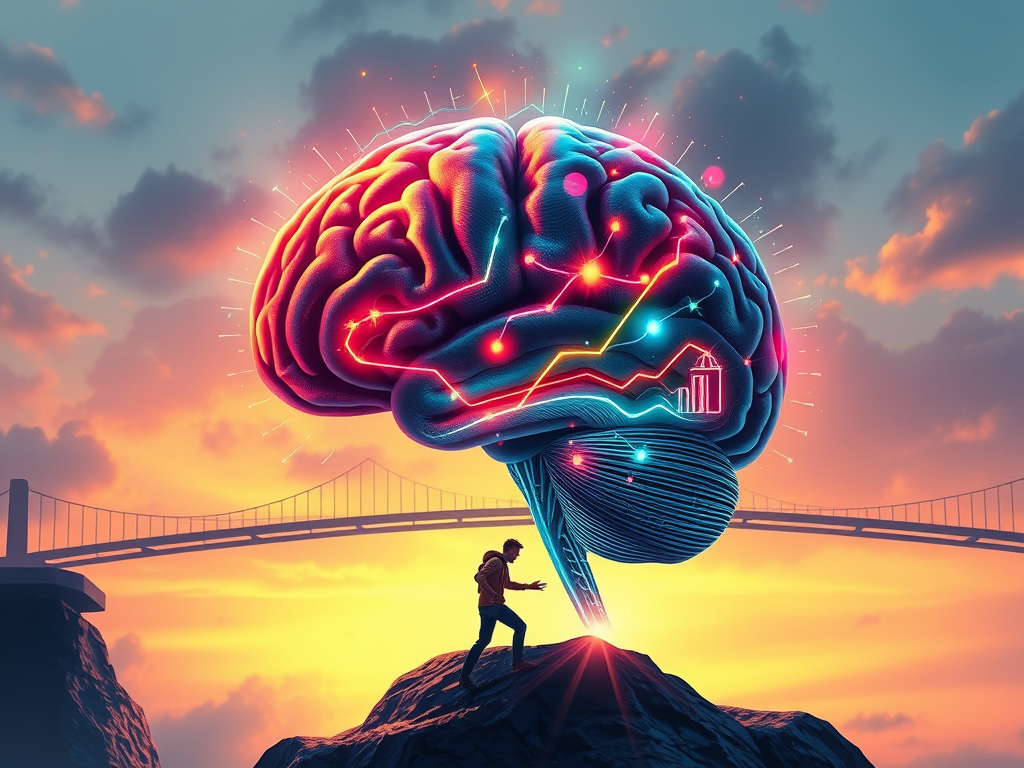
Reinforcing Consistency Through Cognitive and Behavioral Mastery
Introduction — Discipline as the Engine of Progress
Talent may set the direction, but discipline determines the destination.
In every domain — from scientific research to athletic performance — self-discipline consistently outperforms innate ability. It is the bridge between intention and execution, converting potential energy into productive output.
Yet discipline is not an act of suppression or sheer willpower. It is a learnable system of self-regulation, rooted in neuroscience and behavioral conditioning. True discipline aligns cognition, emotion, and environment so that the desired behavior becomes the path of least resistance.
This article explores the scientific foundations of self-discipline, the mechanisms of impulse control, and practical methods for designing a consistent, resilient life aligned with purpose.
1. The Neuroscience of Self-Control
Self-discipline operates through the prefrontal cortex (PFC) — the brain’s executive command center responsible for planning, decision-making, and impulse regulation.
When functioning optimally, the PFC suppresses impulsive signals from the amygdala (emotion center), allowing rational evaluation before action.
However, under stress or fatigue, the PFC’s performance declines, weakening our capacity to delay gratification. This is why discipline often fails at the end of exhausting days — not due to moral weakness, but cognitive depletion.
Key Neuroscientific Insights:
- Self-control correlates with glucose metabolism and mental energy availability.
- The anterior cingulate cortex (ACC) monitors conflicts between immediate impulse and long-term intention.
- Dopamine reinforcement shifts behavior when delayed rewards become emotionally salient.
In essence, discipline is not a single act of resistance — it is a neurological negotiation between emotion and reason, mediated by energy and environment.
2. The Marshmallow Test and Beyond
The famous Stanford Marshmallow Experiment (1972), conducted by Walter Mischel, linked delayed gratification in children to higher life success decades later.
However, follow-up studies clarified that discipline is context-dependent, influenced by environment and trust.
Children who believed the researcher would return with the promised second marshmallow were more likely to wait.
Lesson:
Self-discipline is not just about internal strength — it’s also about reliable systems and credible rewards.
To cultivate discipline, one must build environments where consistency pays off predictably.
3. From Willpower to Structure
Modern research challenges the myth that discipline is purely an act of will.
Roy Baumeister’s ego-depletion theory originally suggested willpower is a finite resource; later refinements emphasize that belief and routine determine its endurance.
The most disciplined individuals rarely exert raw self-control continuously. Instead, they design systems that minimize choice fatigue.
They rely on:
- Implementation intentions — “If X happens, I will do Y.”
- Precommitment strategies — removing temptation in advance.
- Environmental priming — arranging cues that nudge desirable behavior.
Discipline, then, becomes less about struggle and more about strategic automation.
4. The Behavioral Economics of Consistency
Behavioral science defines discipline as the capacity to discount future rewards less steeply than others.
This phenomenon, known as temporal discounting, describes our tendency to undervalue distant gains relative to immediate pleasure.
To counteract it:
- Visualize future rewards concretely. Vivid mental imagery activates the same reward circuitry as actual experience, bridging temporal distance.
- Use commitment contracts. Apps like Beeminder or StickK leverage loss aversion — you forfeit money if you fail to follow through.
- Gamify progress. Incremental goals, streak tracking, and visible feedback sustain engagement through dopamine release.
Through these mechanisms, delayed gratification becomes emotionally rewarding rather than abstractly rational.
5. The Role of Habits in Automated Discipline
Once habits are established, discipline shifts from conscious control to subconscious execution.
The basal ganglia, responsible for procedural memory, activates when behavior becomes automatic — reducing mental effort and emotional resistance.
Thus, the key to sustainable discipline is front-loading cognitive effort during habit formation, then allowing neural efficiency to carry momentum forward.
Practical strategy:
- Start small (micro-habits).
- Link new behaviors to existing cues (habit stacking).
- Celebrate completion, not intensity.
Discipline is built not in grand gestures, but in repeated micro-decisions made under consistent conditions.
6. Emotional Regulation and Delay of Gratification
Emotional self-regulation is inseparable from discipline.
When emotion overwhelms reasoning, impulse prevails. Therefore, disciplined individuals develop meta-awareness — the ability to pause, observe emotion, and reframe it.
Techniques such as mindful breathing, cognitive reframing, and somatic grounding help maintain calm during temptation.
Neuroscientific evidence shows that mindful individuals exhibit stronger connectivity between the PFC and amygdala — a neural marker of composure and delayed response.
Emotional regulation transforms discipline from suppression into intelligent response.
7. Designing for Friction and Focus
A powerful yet overlooked strategy in self-discipline is behavioral architecture:
- Increase friction for undesired behaviors (logout from social media, store sweets out of sight).
- Reduce friction for desired actions (keep gym clothes ready, set workspace the night before).
These structural tweaks exploit the brain’s energy economy — we follow the path of least resistance.
By manipulating friction, you shift discipline from mental struggle to environmental guidance.
8. Resilience and the Discipline–Identity Loop
Sustained discipline requires identity reinforcement.
When individuals internalize disciplined behavior as part of self-concept (“I’m the kind of person who follows through”), actions become self-confirming.
This creates a discipline–identity feedback loop:
- Small disciplined acts reinforce belief in personal reliability.
- That belief strengthens future discipline.
- The loop compounds into character.
Resilience emerges not from perfection but from recovery — each time you return to your system after deviation, you reassert identity and reinforce psychological durability.
Conclusion — The Architecture of Consistent Excellence
Discipline is not a moral virtue — it is a form of engineering.
It is the deliberate structuring of attention, emotion, and environment to make productive behavior inevitable.
When designed intelligently, discipline ceases to feel like resistance; it becomes rhythm — the natural cadence of mastery.
In the philosophy of Zero to Zenith, self-discipline is the most powerful form of freedom: freedom from impulse, distraction, and stagnation.
To learn how to design systems that sustain consistency and self-regulation, begin with our free course:
Mindset Mastery: Rewiring for Growth — your framework for developing mental endurance and disciplined success.
- From Zero to Zenith in an Unstable World: Discipline as the New Advantage
- The Discipline of Showing Up When Nothing Happens
- The Continuum of Lifelong Mastery
- The Architecture of Focus and Flow
- The Social Dimension of Growth
Leave a Reply