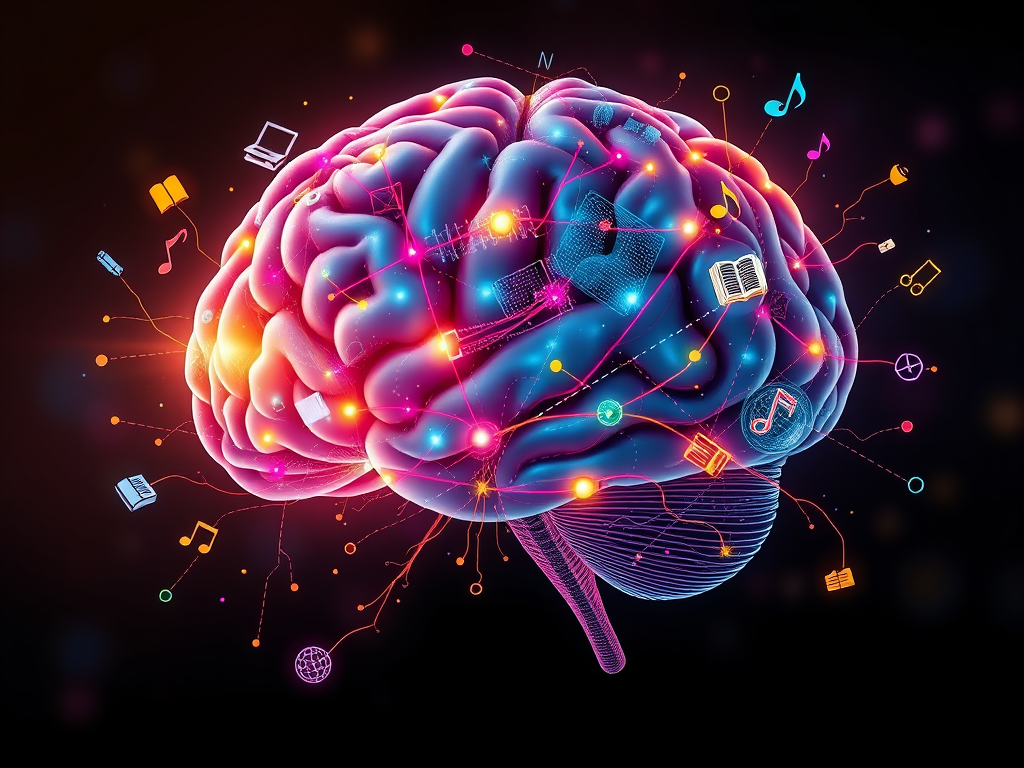
How the Brain Adapts, Evolves, and Sustains Personal Growth
Introduction — The Brain as a Dynamic System
For centuries, the human brain was believed to be static — fully developed by adulthood and gradually declining thereafter. Modern neuroscience has completely overturned that notion. The brain is not a fixed organ but a dynamic, self-restructuring system capable of growth, adaptation, and reorganization throughout life.
This capacity for change, known as neuroplasticity, underpins every act of learning, creativity, and personal transformation. Whether mastering a new language, developing leadership skills, or changing unproductive behaviors, the same biological principle applies: neurons that fire together, wire together.
In the context of personal success and lifelong learning, understanding neuroplasticity transforms motivation into method. It reveals that improvement is not limited by age, background, or circumstance — but by the consistency and quality of engagement.
1. The Science of Neural Adaptation
Neuroplasticity refers to the brain’s ability to form new neural connections and restructure existing ones in response to experience, practice, and reflection. This adaptability occurs on two levels:
- Structural plasticity — the physical growth of new neurons and synapses (connections).
- Functional plasticity — the reassignment of existing neurons to new tasks or skills.
When you practice a new skill, such as coding or playing piano, the brain strengthens pathways between neurons responsible for that activity. Over time, those circuits become faster, more efficient, and more resistant to disruption.
Crucially, this process depends on repetition, attention, and emotional engagement. Learning that is deliberate, meaningful, and emotionally stimulating creates stronger, more enduring neural patterns.
“The brain is a muscle that works the way muscles do — it strengthens with practice and weakens with neglect.”
— Norman Doidge, The Brain That Changes Itself
2. Cognitive Flexibility — The Core of Lifelong Learning
Neuroplasticity supports cognitive flexibility — the ability to adapt one’s thinking, strategies, and problem-solving approaches when faced with new information or challenges.
Cognitive flexibility is especially critical in an era of rapid technological and professional change. The most successful individuals are not those who know the most, but those who can learn, unlearn, and relearn effectively.
Studies show that adults who regularly engage in new, demanding activities — learning an instrument, acquiring a new language, or pursuing complex hobbies — exhibit higher memory retention and executive function into later life. Continuous novelty keeps the brain metabolically active and neurologically young.
3. The Learning–Emotion Connection
Neuroplasticity is profoundly influenced by emotion. The limbic system, particularly the amygdala and hippocampus, plays a central role in encoding experiences into long-term memory.
Emotionally neutral learning fades quickly; emotionally charged experiences — even subtle curiosity or pride — strengthen synaptic retention.
This is why passionate learners outperform compliant learners. They engage both the affective and cognitive domains of the brain, converting curiosity into durable understanding.
For lifelong learners, this means designing learning experiences that are personally meaningful, contextually relevant, and emotionally resonant.
4. Deliberate Practice and Neural Efficiency
All learning is not equal. The difference between repetition and mastery lies in deliberate practice — focused, feedback-driven refinement.
According to Anders Ericsson’s research on expert performance, deliberate practice requires:
- Clear goals — targeting specific aspects of improvement.
- Immediate feedback — enabling real-time course correction.
- Sustained focus — practicing at the edge of competence.
In neuroscience, this process promotes myelination, where repeated activation of neural pathways wraps them in insulating sheaths of myelin, increasing transmission speed and precision.
Hence, deliberate practice doesn’t just improve skill — it reconstructs the brain’s wiring for efficiency.
5. The Plasticity–Rigidity Cycle
Even within adaptive systems, the brain alternates between plastic (learning) phases and rigid (stabilizing) phases.
- Plastic phases occur when you’re exploring new ideas or skills.
- Rigid phases consolidate learning, embedding new knowledge into stable patterns.
This cyclical rhythm mirrors engineering systems that oscillate between innovation and optimization. Understanding this allows learners to avoid frustration during consolidation plateaus — a natural stage where neural circuits are stabilizing, not stagnating.
In practical terms:
- Embrace moments of uncertainty; they signal active rewiring.
- Respect rest; consolidation requires downtime and sleep.
6. Environments That Enhance Neuroplasticity
Your environment can either promote or inhibit neural adaptability. The following evidence-based conditions enhance learning plasticity:
- Novelty exposure — Regular engagement with unfamiliar challenges.
- Physical exercise — Increases blood flow, releasing brain-derived neurotrophic factor (BDNF), a “fertilizer” for neurons.
- Adequate sleep — Critical for memory consolidation and synaptic pruning.
- Mindfulness and meditation — Improve gray matter density in regions linked to attention and self-regulation.
- Positive social interaction — Stimulates oxytocin and dopamine release, reinforcing motivation to learn.
Each factor acts as a catalyst, expanding your brain’s capacity to adapt and sustain learning over the long term.
7. Overcoming the Myth of “Fixed Intelligence”
The belief in fixed intelligence — the idea that aptitude is predetermined — is among the greatest inhibitors of lifelong learning.
Neuroscientific evidence dismantles this myth: even in late adulthood, the brain retains its capacity for reorganization.
The real constraint is not biological, but psychological. When individuals adopt a growth mindset, they engage the brain’s plastic potential through persistence and openness.
As Dweck’s research shows, the expectation of improvement activates neural effort, while the expectation of limitation inhibits it.
Thus, belief is not just motivational — it is neurological.
8. Engineering a Life of Continual Learning
To turn neuroplasticity from theory into lifestyle:
- Learn by teaching: Explaining concepts to others enhances encoding.
- Rotate disciplines: Cross-domain learning fosters creative synthesis.
- Track curiosity: Maintain a learning journal that records insights and emerging questions.
- Balance challenge with rest: Allow downtime for neural consolidation.
- Revisit core knowledge: Periodic review strengthens retrieval pathways.
Learning becomes self-sustaining when the process itself becomes rewarding — when curiosity replaces obligation, and the pursuit of knowledge becomes a way of being.
Conclusion — The Brain as an Ever-Evolving Instrument
Neuroplasticity is nature’s gift for reinvention.
It ensures that no individual remains bound by their past — every thought, every new practice, reshapes the neural fabric of the self.
In the Zero to Zenith philosophy, lifelong learning is not a strategy but a state of becoming — a perpetual dialogue between the mind and its own potential.
If you’re ready to activate the brain’s capacity for continuous adaptation, begin with our free course:
The Lifelong Learner’s Blueprint — a structured exploration of how to sustain curiosity, rewire cognition, and evolve without limits.
- From Zero to Zenith in an Unstable World: Discipline as the New Advantage
- The Discipline of Showing Up When Nothing Happens
- The Continuum of Lifelong Mastery
- The Architecture of Focus and Flow
- The Social Dimension of Growth
Leave a Reply